

Materialgestaltung des Englisch-GK Frau Pohl
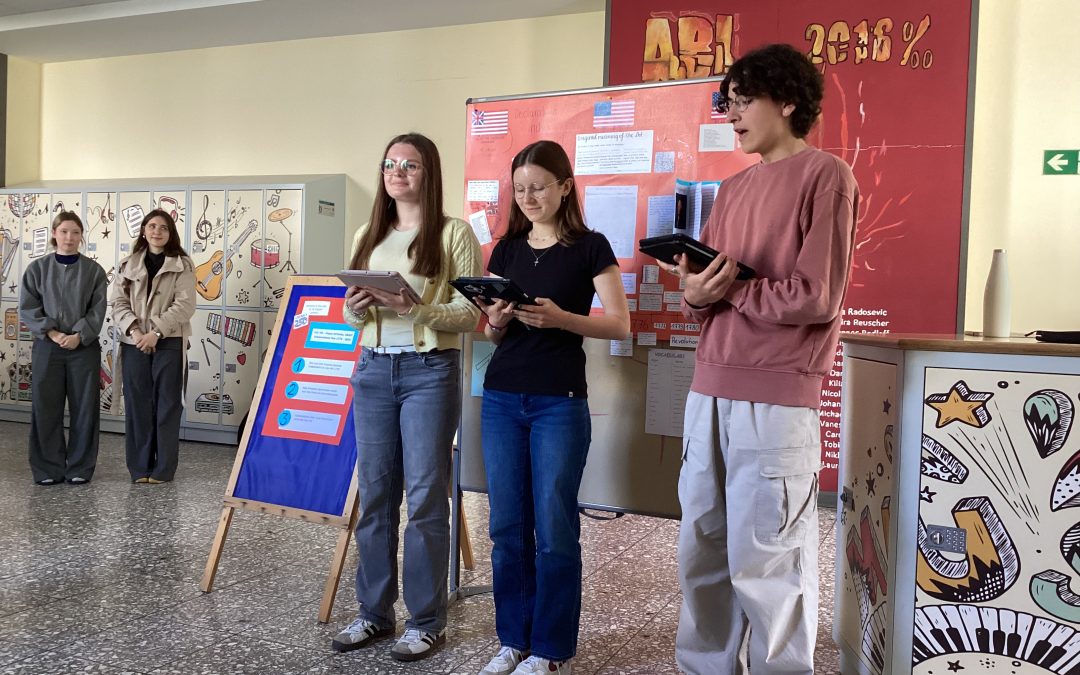
Die Englischkurse der MSS11 am Landesmusikgymnasium haben den 250. Geburtstag der USA zum Anlass genommen, eine vielfältige Ausstellung auf die Beine zu stellen – und das Ergebnis kann sich wirklich sehen lassen! Im ersten Stockwerk, in der Nähe der Räume G106–G111, können Besucherinnen und Besucher anhand von Texten, Illustrationen, interaktiven Elementen, selbsterstellten Videos, Audios und Podcasts spannende Einblicke in die Geschichte und Gegenwart der Vereinigten Staaten gewinnen: von der Unabhängigkeitserklärung über die Sklaverei und den Bürgerkrieg bis hin zu aktuellen gesellschaftlichen Debatten und dem Leben junger Menschen in den USA heute. Am 11. Juni fand die offizielle Eröffnung statt, die einen würdigen Abschluss eines Projekts unter der Anleitung der EnglischkollegInnen Frau Pohl, Frau Simon und Herrn Amthor bildete, bei dem die Schülerinnen und Schüler nicht nur ihr Englisch unter Beweis gestellt, sondern auch moderne Arbeitsmethoden kennengelernt haben. Bei der Erstellung der Ausstellung arbeiteten die Klassen nämlich nach der SCRUM-Methode – einer agilen Projektmanagement-Methode aus der Arbeitswelt, die Teamarbeit, klare Aufgabenverteilung und strukturiertes Arbeiten in den Mittelpunkt stellt. Ein Besuch lohnt sich!
Text: Heike Pohl
Lesen Sie hier auch den ausführlichen Bericht von Lilli Pfeiffer aus dem Grundkurs der MSS11.
Happy Birthday, USA – From Ideals to Independence and Into Modern America
The United States is turning 250 years old in 2026, a monumental event the Year 11 English classes couldn’t ignore. This is why we created an exhibition about America’s history, the United States today, Fourth of July traditions and more. You can find it on the first floor near rooms G106–G110. It’s divided into two parts: a smaller part, mainly for students from Years 9 and 10, and another part for the advanced classes.
From research to creating the exhibits, we used the SCRUM method, initiated by our English teachers Mrs. Pohl, Mrs. Simon and Mr. Amthor. SCRUM is a way to organize work in a team. It was first introduced in 1995 and has been used in many different contexts since then. It helped us structure our teamwork and, with that, mounting the final exhibition.
Materialgestaltung des E-LK2 Frau Simon
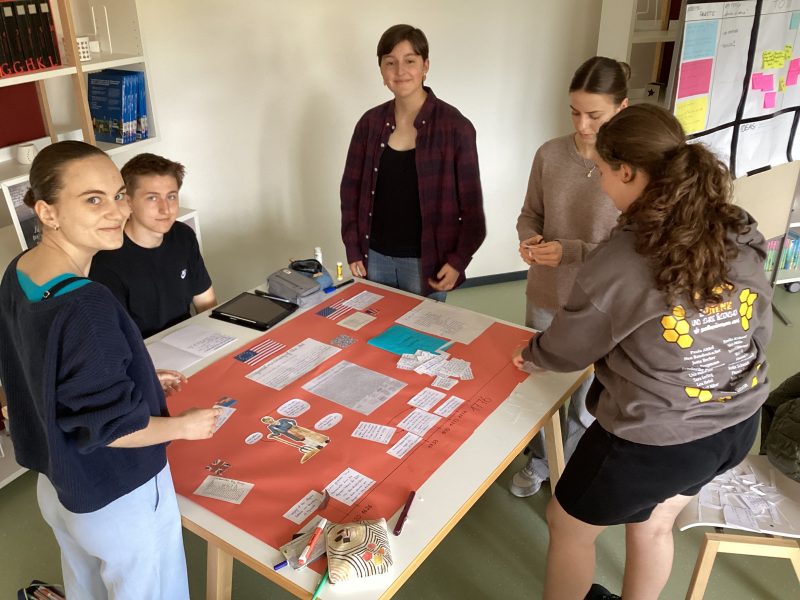
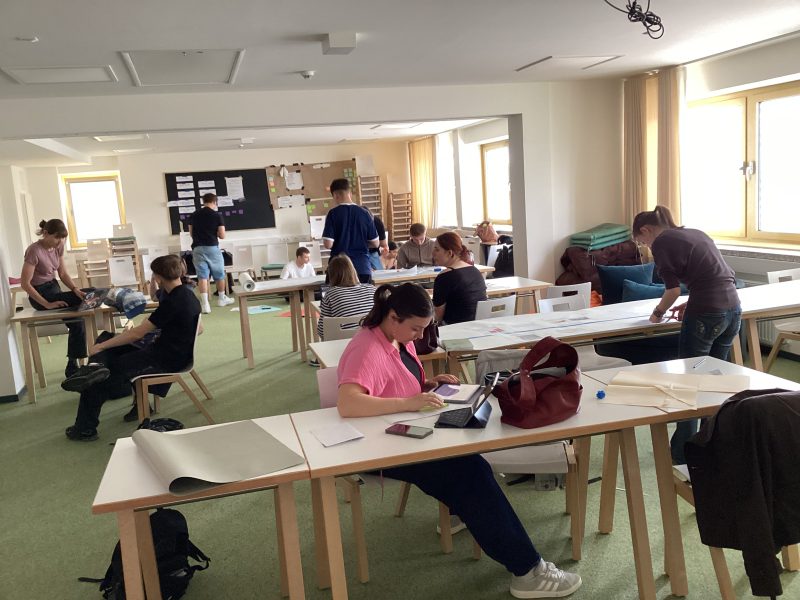
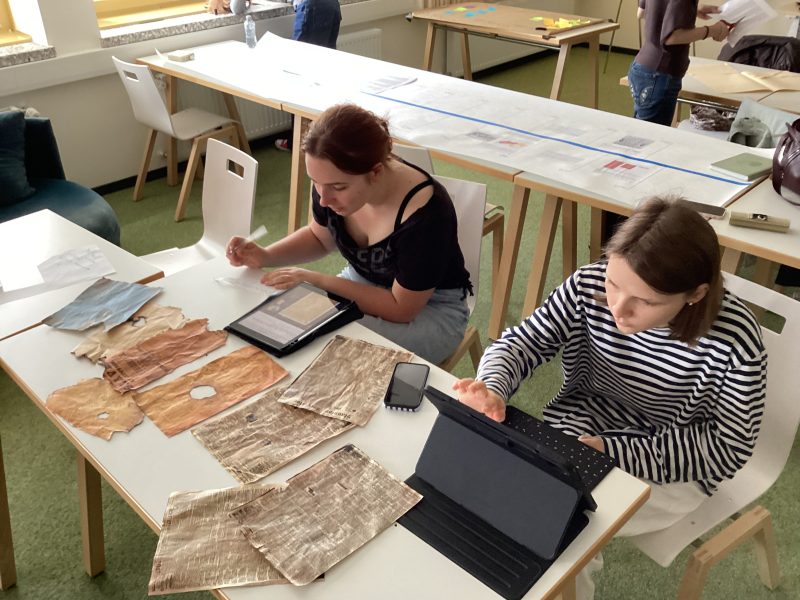
In the foundation course, we were first asked to fill out a paper about skills such as writing, presenting or spreading positive energy. Based on this information, Mrs. Pohl assembled the groups we would later work in. The principles of the SCRUM method can be explained most easily by looking at two key aspects: task management and work process. For the task management, every group received a so-called „SCRUM board“. This board was a big poster that became the place for us to meet, to discuss and mostly to plan. The poster included general information about our project, for example the headline of the project, the group members, and the biggest tasks. We would expand it by deciding on team ethics, writing down ideas and also obstacles that developed in the process and, most importantly, by planning our tasks. To do so, we were supposed to define tasks „as small as possible“. (For example designing a poster would include tasks like „do research about the topic“, „formulate informative texts/bullet points“, „search for pictures“, „print pictures“ etc.) We wrote all our to-dos on post-its and arranged them in a table with the columns „To do“, „Doing“ and „Done“. After someone decided to start that task, they moved it to „Doing“, and lastly, after finishing it, to „Done“. That way, all the team members always had an overview of the project’s status. The work process followed a (more or less) strict procedure. Every team had its team captain, who was in charge of the SCRUM board. At the beginning of each lesson, the groups met and, where necessary, updated each other on work they might have done at home. Then, as explained, the tasks were discussed and written down. After that, the most important part happened: the sprint. Sprints are the phases where everyone concentratedly works on tasks. After the sprints, we came back together to talk about our progress and eventually decide on some homework. What might sound a little difficult at first actually helped us a lot to achieve a productive workflow while still keeping each other updated. During the work process, of course, there also were some obstacles. Surprisingly, getting used to the new method wasn’t one of them; in fact, it worked out pretty well for us from the very start. But still, it was sometimes hard to define our tasks well enough to work with them without spending too much time formulating the tasks themselves. Because another relevant aspect was time. As always when working in a team, everybody had to be reliable and do their work on time. Even then, many of the groups were having trouble finishing their exhibits on time in the end. We did have to put in some extra effort to complete everything to our satisfaction, but finally we did it and in my opinion, the benefits of the SCRUM method truly outweighed the challenges.
Materialgestaltung des E_LK1 Herr Amthor
Not only did the method actually help us organize everything, it was also very interesting to try something new. Even though not everything went perfectly well, we still had a great time working on a project that really brought us together. Never underestimate the power of teamwork! In the end, we managed to prepare an informative, diverse exhibition, which opened to the public (aka the school) on June 11th. It was a great conclusion to the project. Visiting the exhibition, you can learn about the Declaration of Independence and the founding of the US, slavery and the Civil War, the ideals of a democracy and growing up in the USA today. There’s information about controversial issues that divide the American population but also how they spend their Fourth of July. All in all, we look back on a successful project that brought a lot of fun and new knowledge for all of us.
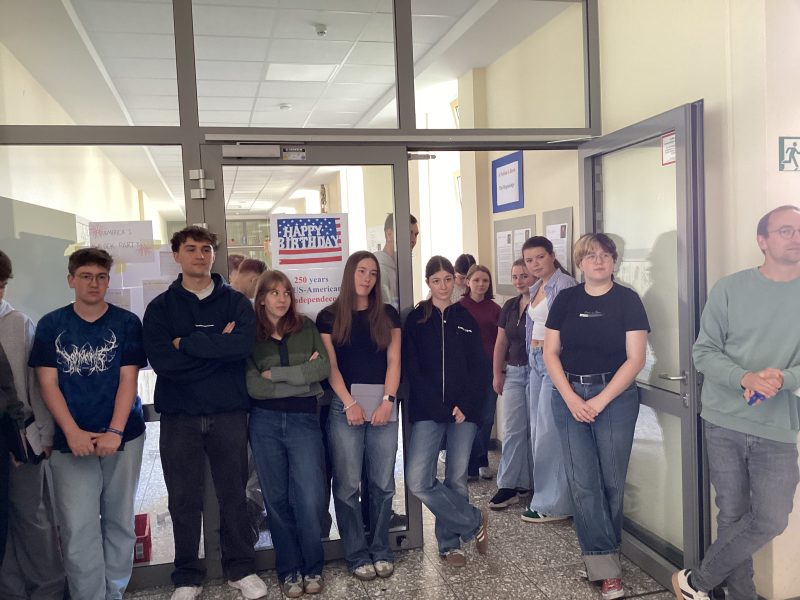
Eröffnung der Ausstellung